
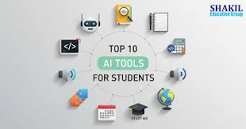
AI Tools for Students: The Ultimate Guide to Learning Smarter in 2026
Artificial Intelligence (AI) has completely changed how students study, complete assignments, and prepare for exams. Instead of spending hours searching for information or organizing notes manually, students can now use AI-powered tools to learn faster, improve productivity, and achieve better academic results.
Whether you’re in high school, college, or university, AI tools can help with writing essays, solving math problems, creating presentations, summarizing long documents, learning new languages, and even preparing for interviews.
However, the key is to use AI as a learning assistant rather than a replacement for your own thinking. When used responsibly, these tools can make studying easier, reduce stress, and help students focus on understanding concepts instead of wasting time on repetitive tasks.
In this guide, you’ll discover the best AI tools for students in 2026, their features, benefits, and tips for using them effectively.
Why Students Should Use AI Tools
AI has become one of the most valuable learning technologies available today. Instead of replacing teachers, it supports students by providing instant explanations, personalized learning experiences, and better organization.
Some major benefits include:
- Save hours on research
- Improve writing quality
- Organize study schedules
- Generate summaries quickly
- Solve complex problems step-by-step
- Learn difficult concepts more easily
- Prepare for exams efficiently
- Increase productivity
Students who use AI wisely often spend less time on repetitive tasks and more time actually learning.
- ChatGPT
ChatGPT is one of the most popular AI tools for students. It helps explain complex topics in simple language, making it easier to understand difficult subjects.
Key Features
- Homework assistance
- Essay writing support
- Coding help
- Research explanations
- Brainstorming ideas
- Language learning
- Exam preparation
- Practice questions
Best For
- College students
- University students
- Researchers
- Programming learners
- Google Gemini
Google Gemini combines Google’s powerful search capabilities with artificial intelligence to provide detailed answers, summarize information, and assist students with research.
Benefits
- Fast research
- Image understanding
- Document analysis
- Study planning
- Brainstorming
Gemini is especially useful for students who rely on Google Workspace.
- Grammarly
Grammarly helps students improve grammar, spelling, punctuation, vocabulary, and writing clarity.
Instead of simply correcting mistakes, it explains why changes should be made, helping students become better writers over time.
Features
- Grammar correction
- Tone suggestions
- Vocabulary improvement
- Plagiarism detection (Premium)
- Citation support
- Notion AI
Notion AI combines note-taking with artificial intelligence, allowing students to organize study materials, summarize lectures, and create structured notes.
It helps students:
- Organize lectures
- Create study plans
- Summarize long notes
- Generate task lists
- Manage projects
For students juggling multiple courses, Notion AI can become a central workspace for all academic activities.
- Perplexity AI
Perplexity AI is an AI-powered research assistant that provides direct answers along with references to reliable sources.
Unlike traditional search engines, it summarizes information from multiple sources, helping students find accurate answers more efficiently.
Best Uses
- Academic research
- Fact-checking
- Source discovery
- Literature review
Tips for Using AI Responsibly
AI is a powerful learning companion, but it should never replace your own understanding. To get the most value from these tools:
- Use AI to understand concepts rather than copy answers.
- Always verify important facts from trusted sources.
- Edit AI-generated content in your own words.
- Avoid submitting AI-written assignments without reviewing them.
- Respect your school’s academic integrity policies.