
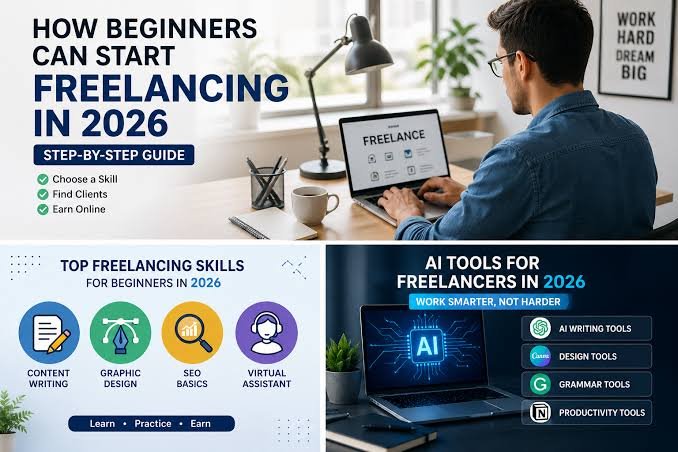
Freelancing has become an increasingly popular way for people to earn money online. Instead of working for a single company, freelancers provide their skills and services to different clients, often from different countries.
For people who have skills in writing, graphic design, web development, digital marketing, video editing, programming, or other digital services, freelancing can provide an opportunity to work remotely.
If you are wondering how to start freelancing in Pakistan, the good news is that you do not necessarily need a large investment to get started. You mainly need a useful skill, a computer or smartphone, a reliable internet connection, and the willingness to learn.
This guide explains the basic steps beginners can follow to start building a freelancing career.
What Is Freelancing?
Freelancing means working independently for clients instead of being permanently employed by one organization.
A freelancer may work on short-term projects, long-term contracts, or individual tasks.
For example, a client may hire a freelance writer to create blog articles, a designer to create a logo, or a developer to build a website.
The freelancer completes the agreed work and receives payment according to the project’s terms.
One of the biggest advantages is flexibility. Freelancers can often choose which projects they want to work on and organize their schedules according to their availability.
Why Is Freelancing Popular in Pakistan?
Pakistan has a large population of young people who are interested in digital skills and online work.
The growth of remote work and digital businesses has also increased demand for services such as programming, content writing, graphic design, video editing, and marketing.
Another advantage is that freelancers can potentially work with clients from different countries.
However, freelancing should not be viewed as an instant way to make money. Building a successful profile and finding reliable clients usually takes time, practice, and consistency.
Step 1: Choose a Freelancing Skill
The first step in how to start freelancing in Pakistan is deciding what service you want to offer.
You do not need to learn everything. It is usually better to choose one skill and become good at it.
Popular freelancing skills include:
- Content writing
- SEO
- Graphic design
- Web development
- WordPress development
- Video editing
- Social media management
- Virtual assistance
- Data entry
- UI/UX design
- Programming
- Digital marketing
Think about your interests and existing abilities before choosing a skill.
If you enjoy writing, content writing or copywriting may be a good starting point. If you enjoy technology, web development or WordPress may be more suitable.
Step 2: Learn the Basics
After choosing a skill, spend time learning it.
Beginners can use free tutorials, online courses, documentation, educational videos, and practice projects.
Do not focus only on watching tutorials.
Practice is extremely important.
For example, someone learning graphic design can create sample logos and social media designs. A beginner writer can create sample blog posts. A web developer can build simple websites.
Practical projects help you understand how the skill works in real situations.
Step 3: Build a Portfolio
A portfolio is one of the most important things for a new freelancer.
Clients want to know what you can actually do.
You do not necessarily need previous paid clients to create a portfolio.
You can create your own sample projects.
For example:
A content writer can write three sample articles.
A graphic designer can create sample posters, logos, and social media graphics.
A web developer can build a few demo websites.
A video editor can create sample short videos.
The purpose of a portfolio is to demonstrate your ability.
Step 4: Create a Professional Profile
Once you have a skill and portfolio, create professional profiles on suitable freelancing platforms and professional networks.
Your profile should clearly explain:
- What service you provide
- What type of clients you help
- Your skills
- Your experience
- Your portfolio
- What makes your service useful
Avoid writing a profile that is too generic.
Instead of saying:
“I can do everything.”
Explain exactly what you specialize in.
A focused profile can make it easier for potential clients to understand your service.
Step 5: Create Clear Service Offers
Your service offer should tell clients exactly what they will receive.
For example, instead of simply offering “SEO services,” you could specify a particular service such as keyword research, on-page SEO, or SEO content writing.
Clear offers are easier for clients to understand.
You should also clearly define:
- Deliverables
- Delivery time
- Number of revisions
- Required information from the client
- Pricing
This can reduce misunderstandings later.
Step 6: Start With Realistic Expectations
One of the biggest mistakes beginners make is expecting to earn a large amount of money immediately.
Freelancing is competitive.
Your first goal should be gaining experience, improving your portfolio, and understanding how clients work.
You may initially receive small projects.
Treat those projects professionally and use them as opportunities to improve.
As your skills, reviews, portfolio, and client relationships grow, you can gradually target better projects.
Step 7: Learn How to Communicate With Clients
Technical skills are important, but communication is equally valuable.
Clients want freelancers who respond clearly, understand instructions, meet deadlines, and communicate professionally.
Before starting a project, make sure you understand what the client wants.
If something is unclear, ask a specific question instead of making assumptions.
Good communication can turn a one-time project into a long-term client relationship.
Step 8: Avoid Freelancing Scams
New freelancers can sometimes become targets for scams.
Be careful if someone promises unusually high payment for very little work.
Other warning signs include requests for sensitive information, suspicious payment arrangements, or pressure to move conversations to unknown websites.
Never share passwords, authentication codes, or unnecessary personal information with clients.
Use secure payment methods and understand the rules of the platform you are using.
If a project sounds unrealistic, investigate it carefully before accepting it.
Step 9: Manage Your Time
Working from home does not mean there are no deadlines.
Freelancers need to manage their schedules effectively.
Create a daily routine and divide large projects into smaller tasks.
For example, a writer might divide an article into:
- Research
- Outline
- First draft
- Editing
- SEO optimization
- Final proofreading
This makes large projects easier to manage.
Avoid accepting more projects than you can realistically complete.
Missing deadlines can damage your reputation.
Step 10: Keep Improving Your Skills
The online marketplace changes constantly.
New tools, technologies, platforms, and client requirements appear regularly.
Successful freelancers continue learning even after they start earning.
For example, a content writer can learn SEO, a graphic designer can learn motion graphics, and a web developer can learn new frameworks.
Adding related skills can help you provide more value to clients.
How Much Can a Freelancer Earn?
There is no fixed freelancing salary.
Income depends on factors such as:
- Skill level
- Type of service
- Experience
- Portfolio quality
- Client demand
- Number of projects
- Pricing
- Communication skills
A beginner may start with small projects, while experienced freelancers with specialized skills may charge significantly more.
Instead of focusing only on a specific income target, beginners should focus on developing a valuable skill and building a strong reputation.
Common Mistakes Beginners Should Avoid
New freelancers often make several mistakes.
One common mistake is offering too many unrelated services.
Another is copying other people’s portfolios or profiles.
Some beginners also accept every project without checking whether they have enough time to complete it.
Poor communication and missed deadlines can also create problems.
Finally, never pay someone simply because they promise guaranteed freelance work.
Legitimate opportunities should be evaluated carefully.
Final Thoughts
Learning how to start freelancing in Pakistan can be the beginning of a valuable online career, but success usually requires patience and consistent effort.
Start by choosing one skill, learn the fundamentals, create practical projects, build a portfolio, and present yourself professionally.
Once you begin finding clients, focus on communication, quality, deadlines, and building long-term relationships.
Freelancing is not a shortcut to instant income. It is a skill-based career that can grow gradually as your abilities and reputation improve.
For anyone willing to learn and practice, freelancing in Pakistan can provide an opportunity to work with clients beyond their local market and build a flexible digital career.