
Introduction
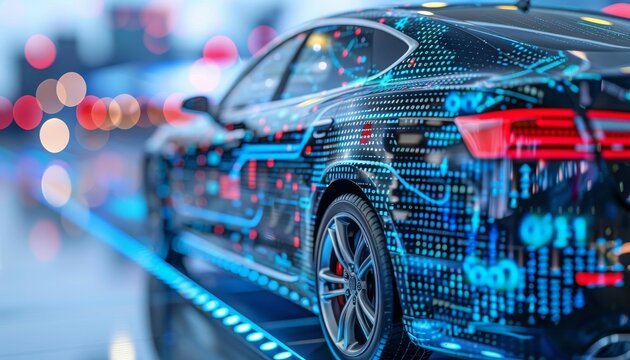
The automobile industry has seen many changes in the past decade. Today’s cars are no longer just machines that help transport people from point A to point B. Due to fast-growing technological advances in the auto industry, cars today have become more efficient, safer, and smarter than ever before.
Through electric vehicles, autonomous driving, artificial intelligence, and other technologies in the auto sector, auto technology is helping transform the driving experience as well as the interaction between individuals and vehicles. No matter whether you are a tech savvy person or an automobile buff, learning about the latest advances in auto technology is vital.
This article will discuss some of the newest trends, challenges, and benefits of auto technology as well as reasons for its significance to the world.
What Is Auto Technology?
Autotechnology is a term that describes the technology used in contemporaryautomobiles. These include various innovations related to automotive systems, software, electronics, and engineering.
Some of the main objectives of autotechnology include:
Ensuring driver safety
Boosting vehicle performance
Saving fuel consumption
Minimizing impact on the environment
Creating better driving experience Improving connectivity and convenience
Contemporary cars are equipped with computers, sensors, cameras, and artificial intelligence systems to facilitate driving tasks.
Evolution of Auto Technology
The story of automobile technology is truly amazing.
First Automobiles
The initial automobiles had no electronics, with a few basic components. Drivers used to control all systems manually.
The Electronic Era
Since the 1980s and 1990s, ECUs have become widely used. Fuel injection, ABS, and airbags have greatly increased vehicle safety and performance.
The Smart Car
Modern automobiles are equipped with sophisticated software, cloud-based computing systems, GPS navigation, and Internet connections. In many cases, a car can be updated through the cloud.
The auto industry is developing at an unprecedented rate.
Electric Vehicles: The Biggest Innovation in Auto Technology
Electric cars have emerged to be among the greatest inventions in today’s automobile industry.
Electric cars differ from conventional automobiles in that they are driven by electric motors using batteries.
Advantages of Electric Cars
They emit no tailpipe emissions
Low maintenance cost
Cheaper fuel cost
Silent and smooth drive
Quick acceleration
Improved energy efficiency
Governments across the world are promoting the use of electric cars through various initiatives.
With advancements in battery technologies, electric cars are becoming cheaper and practical.
Artificial Intelligence in Auto Technology
Artificial Intelligence (AI) is revolutionizing modern vehicles by making them smart driving assistants.
AI aids vehicles to:
Detect pedestrians
Identify traffic signals
Predict driver’s actions
Increase fuel efficiency
Plan routes
Help park Today, many luxury vehicles feature artificial intelligence voice assistants that can process natural language.
Artificial intelligence will still be an important part of future autonomous vehicles.
Autonomous Driving Technology
Self-driving technology is considered one of the most intriguing domains of automotive technology.
Automated cars utilize:
Cameras
Radar
LiDAR
GPS
Artificial Intelligence
Machine Learning
The aforementioned technologies monitor road conditions and make driving decisions all the time.
Autonomous Levels of Driving
Driver Assistance
Partial Automation
Conditional Automation
High Automation
Full Automation
Even though full autonomous cars are yet to be developed, there are cars that have semi-autonomous driving capability.
Connected Cars
Modern vehicles are being converted into connected devices.
A connected car communicates with:
Smartphones
Navigation systems
Cloud servers
Emergency services
Other cars
Traffic control systems
Features include:
Remote vehicle tracking
Live traffic information
Emergency services
Software updates
Vehicle diagnostics
Mobile application controls
Connected cars make lives more convenient and safer.
Advanced Driver Assistance Systems (ADAS)
ADAS is among the fastest-growing parts of automotive technology.
The smart systems prevent accidents through driver assistance.
Among the common ADAS features are:
Adaptive Cruise Control
Adjusts speed to ensure there is sufficient safety distance.
Lane Keeping Assist
Maintains the car within the lane.
Automatic Emergency Braking
Senses collision possibilities and automatically applies the brakes.
Blind Spot Detection
Notifies drivers if another car gets into their blind spots.
Rear Cross Traffic Alert
Notifies drivers of the approaching vehicles while backing.
These systems greatly minimize driver errors.
Smart Safety Features
Safety has always been a priority in automotive engineering.
Modern vehicles now include:
- Multiple airbags
- Electronic Stability Control
- Traction Control
- Tire Pressure Monitoring
- Driver Attention Monitoring
- Collision Warning Systems
- 360-degree Cameras
- Night Vision Cameras
These innovations help prevent accidents before they occur.
Internet of Things (IoT) in Auto Technology
The Internet of Things (IoT) allows vehicles to connect with other devices and systems.
IoT applications include:
- Remote engine start
- Vehicle tracking
- Fleet management
- Predictive maintenance
- Smart parking
- Vehicle health monitoring
Businesses use IoT technology to improve fleet efficiency and reduce operational costs.
Battery Technology
Battery innovation is essential for electric vehicles.
Modern lithium-ion batteries provide:
- Longer driving range
- Faster charging
- Improved lifespan
- Better safety
- Higher energy density
Researchers are also developing solid-state batteries, which promise even greater efficiency and safety.
Green Technology and Sustainability
Auto technology is helping reduce environmental pollution.
Manufacturers now focus on:
- Electric vehicles
- Hybrid technology
- Hydrogen fuel cells
- Lightweight materials
- Renewable manufacturing
- Energy-efficient production
Sustainability is becoming a major factor in automotive innovation.
Vehicle Cybersecurity
As vehicles become connected, cybersecurity becomes increasingly important.
Modern vehicles must protect against:
- Hacking
- Data theft
- GPS manipulation
- Remote access attacks
- Software vulnerabilities
Manufacturers invest heavily in secure software architecture and encryption.
Auto Technology in Manufacturing
Modern factories use advanced robotics and automation.
Benefits include:
- Faster production
- Improved quality
- Reduced waste
- Higher precision
- Lower production costs
Artificial intelligence also helps manufacturers detect defects before vehicles leave the factory.
Benefits of Auto Technology
Modern automotive technology offers numerous advantages.
Improved Safety
Advanced driver assistance systems significantly reduce accidents.
Better Fuel Efficiency
Modern engines consume less fuel while producing more power.
Lower Maintenance
Predictive maintenance alerts drivers before major problems occur.
Enhanced Comfort
Smart climate control, infotainment systems, and digital dashboards improve driving comfort.
Environmental Protection
Electric vehicles reduce greenhouse gas emissions.
Challenges Facing Auto Technology
Despite rapid progress, several challenges remain.
High Costs
Advanced technologies increase vehicle prices.
Charging Infrastructure
Electric vehicle charging stations are still limited in some regions.
Cybersecurity Risks
Connected vehicles require continuous security updates.
Battery Recycling
Proper battery disposal remains an environmental concern.
Legal Regulations
Governments continue developing regulations for autonomous vehicles.
Future Trends in Auto Technology
The future of automotive technology looks promising.
Emerging innovations include:
- Fully autonomous vehicles
- AI-powered driving assistants
- Solid-state batteries
- Vehicle-to-Vehicle communication
- Smart cities integration
- Wireless charging roads
- Hydrogen-powered vehicles
- Digital vehicle ownership
These technologies will transform transportation over the next decade.
Why Auto Technology Matters
Auto technology is more than just innovation—it directly impacts safety, sustainability, convenience, and economic growth.
Consumers now expect vehicles to offer:
- Intelligent safety
- Smartphone integration
- Voice control
- Fuel efficiency
- Eco-friendly performance
- Advanced entertainment systems
Manufacturers that embrace innovation will remain competitive in the rapidly evolving automotive market.
Conclusion
Modern technological developments have completely transformed the automobile industry. There are technologies like electric cars, artificial intelligence, self-driving and smart cars that are changing the way people travel across the globe.
With the development of technology, the vehicles of tomorrow are going to be much smarter, energy-efficient and more environmental. In whatever way you look at it, whether you are planning to buy your car in the near future or follow trends within the industry, knowledge about auto technology will enable you to understand the revolutionary changes.
The automotive industry is stepping into a whole new world where software, artificial intelligence and green energy are equally important as engines and power. Companies and consumers adopting such changes will gain advantage of safer roadways and smarter experience of driving.